
TELEMEDICINE IN DERMATOLOGY FOR RESOURCE POOR COUNTRIES
Orador

Martin Kofi Agyei
Ghana
EDUCATION FWACP (Fellow, West African College of Physicians), October 2013 MSc Clin Derm (London) Master of Science Clinical Dermatology, King’s College, London December, 2008 MWACP (Member, West African College of Physicians), October 2006 MD (Doctor of Medicine) Ukrainian State Medical University, Kiev, 1996 PROFESSIONAL MEMBERSHIP Ghana Medical Association West African College of Physicians Ghana Society of Dermatology WORK EXPERIENCE CURRENT POSITIONS Senior Lecturer, School of Medicine and Dentistry, Kwame Nkrumah University of Science & Technology 2021 to date Lecturer , School of Medicine and Dentistry, Kwame Nkrumah University of Science & Technology, 2012 to 2020 Senior Specialist Physician and Dermatologist, Department of Medicine, Komfo Anokye Teaching Hospital, Kumasi; Ghana, January 2008 to date CURRENT RESPONSIBILITIES TEACHING Didactic lectures on various topics in Clinical Dermatology and Internal Medicine for fourth and final year medical students Bedside teaching of Clinical Methods & Clinical Dermatology to fourth and final year medical students Junior Clerkship for fourth year Dental students Clinical Dermatology for Physician Assistants CLINICAL Management of Dermatological emergencies Inpatient Dermatology related admissions Outpatient Dermatology clinics 2 Dermatology Consultation for all departments at KATH Teledermatological consultation to clinicians from other hospitals PAST POSITIONS Senior Medical Officer January 2001 to December 2007, Department of Medicine, Komfo Anokye Teaching Hospital (KATH), Kumasi, Ghana Medical Officer March 1999 to August 2001, Department of Surgery, KATH House Officer September 1998 to February 1999, Department of Obstetrics and Gynaecology, KATH House Officer February 1998 to August 1998, Department of Child Health, KATH OTHER DUTIES Part-time Senior Lecturer, School of Medicine, University of Health and Allied Sciences Part time Lecturer, School of Medicine and Health Sciences University of Development Studies, Tamale External Examiner, School of Medicine and Health Sciences University of Development Studies, Tamale External Examiner, School of Medical Sciences, University of Cape Coast SEMINARS & CONFERENCES COVID-19 in Ghana-Current Realities and Future Concerns, 15th April 2021 Mapping the Epidemiology of Serious fungal infections in Nigeria, 14 th April 2021 Euracare Advanced Diagnostics: Early diagnosis of female cancers, April 2021 First Aspergillosis Lectures, 1 st February 2021 COVID-19 Vaccine Ghana’s Preparedness and What you need to know, 28th February 2021 Highlighting the Importance of recognizing Invasive fungal infections, 25 th September 2020 AstraZeneca Cardiovascular Webinar Series, 17th September 2020 The World Congress of Dermatology, Milan, Italy, June 2019 Hypogylcaemia; a major limiting factor to achieving intensive glycaemic control in patients with type 2 diabetes mellitus, 29th May 2019, Kumasi, Ghana Epidemiology and Evidence based management of heart failure, 7th March 2019, Kumasi, Ghana The Cardiovasular Masterclass 2018, AstraZeneca/Euracare, 15th February 2018, Kumasi Ghana Pfizer GP Academy, Web Meet Sessions, 22nd February 20118, Kumasi, Ghana AstraZeneca GI Masterclass, 22nd February, 2018, Kumasi, Ghana 3 Pfizer GP Academy, WebMeet Sessions, 31st May 2018 PUBLICATIONS ARISING OUT OF RESEARCH 1. Tannor, E. K., Hussein, K. K., Agyei, M., & Boima, V. (2021). Early detection of kidney disease in Ghana - A situational survey of secondary hospitals in the Ashanti Region of Ghana. African Journal of Current Medical Research, 4(2). https://doi.org/10.31191/afrijcmr.v4i2.68 2. Sarfo FS, Agyei M, Ogyefo I, Opare-Addo PA, Ovbiagele B. Factors Linked to Chronic Kidney Disease Among Stroke Survivors in Ghana. J Stroke Cerebrovasc Dis. 2021 Mar 8;30(5):105720. doi: 10.1016/j.jstrokecerebrovasdis.2021.105720. Epub ahead of print. PMID: 33706193. 3. B Mensah, BR Norman, JJK Annan, A Enimil, M Agyei. Awareness of HIV status and partner disclosure among antenatal clinic attendants: experience from a regional hospital in Ghana. World Journal of Advanced Research and Reviews 2020, 8 (3), 014-027 4. Sarfo FS, Akassi J, Agyei M, Kontoh S, Ovbiagele B. Risk Factor Control in Stroke Survivors with Diagnosed and Undiagnosed Diabetes: A Ghanaian Registry Analysis. Journal of Stroke and Cerebrovascular Diseases, Volume 29, Issue 12, December 2020, 105304 https://doi.org/10.1016/j.jstrokecerebrovasdis.2020.105304 5. Elliot Koranteng Tannor, Martin Agyei, Abena Y. Tannor, Afua Ofori, Emmanuel Akumiah, Yasmin Adoma Boateng, "Hyponatraemia as a Predictor of Mortality in Medical Admissions in Ghana: A Comparative Study", International Journal of Nephrology, vol. 2020, Article ID 3145843, 6 pages, 2020. https://doi.org/10.1155/2020/3145843 6. Laggis, C. W., Secrest, A. M., Agyei, M., Simister, S., Davis, A. N., Dickerson, T., & Rhoads, J. L. The Impact of Skin Disease on Quality of Life in Rural Communities of Ghana. SKIN The Journal of Cutaneous Medicine, 2020, 4(5), 417-423. https://doi.org/10.25251/skin.4.5.4 7. Sarfo FS, Mobula LM, Adade T, Commodore-Mensah Y, Agyei M, Kokuro C, Adu-Gyamfi R, Duah C, Ovbiagele B. Low blood pressure levels & incident stroke risk among elderly Ghanaians with hypertension. J Neurol Sci. 2020 Jun 15; 413:116770. doi: 10.1016/j.jns.2020.116770. Epub 2020 Mar 4. PMID: 32172015 8. Sarfo-Kantanka O, Asamoah-Boaheng M, Arthur J, Agyei M, Barnes NA, Tenkorang EY, Midodzi W.Trends in type 1 diabetes diagnosis in Ghana. Int Health. 2020 Feb 12: ihz096. doi: 10.1093/inthealth/ihz096. Online ahead of print. 9. Owusu-Agyei M, Agyei M, Ogunleye TA Skin-lightening practices among shoppers in selected markets in Kumasi, Ghana: A cross sectional survey. JAAD International, 2020, 1(2), 104-110, 10. Sarfo FS, Opare-Sem O, Agyei M, Akassi J, Owusu D, Owolabi M, Ovbiagele B. Risk factors for stroke occurrence in a low HIV endemic West African country: A case-control study. J Neurol Sci. 2018 Dec 15; 395:8-16. doi: 10.1016/j.jns.2018.09.021. Epub 2018 Sep 20. 11. Sarfo FS, Kyem G, Ovbiagele B, Akassi J, Sarfo-Kantanka O, Agyei M, Badu E, Adusei Mensah N. One-Year Rates and Determinants of Poststroke Systolic Blood Pressure Control among Ghanaians. J. Stroke Cerebrovasc Dis. 2017 Jan;26(1):78-86. doi: 10.1016/j.jstrokecerebrovasdis.2016.08.033. Epub 2016 Sep 14 CASE REPORTS 4 1. Rosemary Abena Kuenyefu Awindaogo, Ivy Ekem, Nana Agyeiwh Awuku, Soziema Salia, Martin Agyei, Yvonne Ayerki Nartey, Yaw Asante Awuku, Reversible hyperpigmentation in Vitamin B12 deficiency: an Addisonian mimic in clinical picture. PAMJ Clinical Medicine. 2020; 4: 109 2. Agyei M, Annan JJ, Ofori A, Norman BR. A Near Fatal Puerperal Flare of Systemic Lupus Erythematosus: Case Report and Review. Global Journal of Medical Research: EGynecology and Obstetrics, Volume 20 Issue 5 Version 1.0, 9-16, 2020 3. Agyei M, Ofori A, g Tannor EK, Annan JJ, Norman BR A forgotten parasitic infestation in an immunocompromised patient-a case report of crusted scabies. Pan African Medical Journal (ISSN: 1937-8688), Volume 36, Article 238, 04 Aug 2020 | 10.11604/pamj.2020.36.238.24288 4. Agyei M, Annan JJ K, O A, Tannor EK, Adjei E. African histoplasmosis-an underdiagnosed tropical disease in GhanaWorld Journal of Advanced Research and Reviews 7(1), 178-182, 2020 5. Adjei M. Poland Syndrome. A curious anomaly. African Journal of Current Medical Research, 4(1). 2020 6. Truong A, Hawkes JE, Agyei M, Woodcock JL, Lewis BKH, Powell DL. (2016). Plexiform neurofibroma. In: Goldsmith L, editor. VisualDx Visual Clinical Decision Support Tool. Rochester, NY: Logical Images On: www.visualdx.com 7. West CM, Lewis BKH, Agyei M, Hawkes JE, Truong A, Powell DL, Woodcock JL. (2016). Chemical leukoderma. In: Goldsmith L, editor. VisualDx Visual Clinical Decision Support Tool. Rochester, NY: Logical Images. On: www.visualdx.com 8. Hansen DJ, Woodcock JL, Hawkes JE, Truong A, Lewis BKH, Agyei M, Powell DL. (2016). Progressive macular hypomelanosis. In: Goldsmith L, editor. VisualDx Visual Clinical Decision Support Tool. Rochester, NY: Logical Images. On: www.visualdx.com PROJECT SUPERVISION SUPERVISION OF POSTGRADUATE FELLOWSHIP PROJECTS IN DERMATOLOGY FOR GHANA COLLEGE AND PHYSICIANS AND SURGEONS Co-supervision of Dr Paa Gyasi Hagan on the Prevalence, Aetiology and Predisposing Factors for Tinea Capitis Amongst Pupils in Rural Communities in the Brong Ahafo Region of Ghana (2020) SUPERVISION OF STUDENT PROJECTS IN INTERNAL MEDICINE • Self-reported Experience of Living with Sickle Cell Disease in Ghana: Implications for Occupational Therapy, Carolyn D’Olympio, University of New Hampshire, 2017 5 • Experiences of Type 2 Diabetes Mellitus Patients with Non-Healing Wounds in Ghana, Lauren Barker, University of New Hampshire, 2016 BOOKS Guide to History Taking and Clinical Examination for Medical Students. Department of Medicine, College of Health Sciences, KNUST. Second Edition, 2018 Guide to History and Examination for Medical Students. Department of Medicine, College of Health Sciences, KNUST. First Edition, 2016 AWARDS Best Doctor for the year 2002, Department of Medicine, Komfo Anokye Teaching Hospital, Kumasi, Ghana HEALTH PROMOTION Promotes health education on various dermatological and medical issues on
Evento fuente
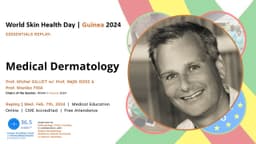
Medical Dermatology - WSHD | Guinea 2024
WSHD | Guinea 2024 Essentials replays the pearls on Medical Dermatology, chaired by Prof. Michel GILLIET, Prof. Franco RONGIOLETTI, Prof. Néjib DOSS and Prof. Monika FIDA.
Experts fostered discussions on cutting-edge medical dermatology advancements and practices. Attend this replay to explore Pyoderma Gangrenosum, precision dermatology for inflammatory skin diseases, dermatophytic infections, cannabis's dermatological challenges, resistant dermatophyte infections, dermatologists' role in managing MPOX, teledermatology in resource-poor countries, chronic hand eczema in 2024, deep fungal infections, atypical mycobacteria in aesthetic medicine, cytotoxic agents in dermatology, skin involvement in breast cancer, severe cutaneous adverse drug reactions, histopathology in HS, digital dermatology, and the significance of methotrexate.
Attend for free, and earn and claims your 36.5 ECMEC® by UEMS-EACCME® and medical education certificate.
Descripción
Teledermatology is a subspecialty in the medical field of dermatology and probably one of the most common applications of telemedicine and e-health. In teledermatology, telecommunication technologies are used to exchange medical information over a distance using audio, visual, and data communication. It is one way by which resource poor countries in Africa can overcome diagnostic challenges and provide the best care to our patients, tapping the expertise of the developed world at no additional cost. Keywords: Telemedicine, e-health, teledermatology, diagnostic challenges, telecommunication technologies
Videos similares
Source event Program
Medical Dermatology
Chair: Pr Michel Gillet
Introduction - Medical Dermatology

Pyoderma Gangrenosum

Precision dermatology for inflammatory skin disease
Michel Gilliet MD, PhD
La maladie dermatophytique, du princeps à l’actualité
Lynda Taibi-Berrah MD
Cannabis et peau : un challenge pour le dermatologue

Resistant dermatophyte infections

THE ROLE OF DERMATOLOGISTS IN THE MANAGEMENT OF MPOX

TELEMEDICINE IN DERMATOLOGY FOR RESOURCE POOR COUNTRIES
Eczema chronique des mains:comment s'en sortir en 2024
Marie-Noëlle Crepy MD
Might interest you

Cutaneous Medicine: Multidisciplinary Approaches in Dermatology
Chair: Prof. Fahafahantsoa Rapelanoro Rabenja,
This course explores the intersection of dermatology with other medical specialties, emphasizing a collaborative approach to diagnosing and managing complex skin disorders. It covers a wide range of topics, including dermatopathology, rheumatology, oncology, and infectious diseases, highlighting how systemic conditions manifest cutaneously. With contributions from experts in various fields, the text provides comprehensive insights into multidisciplinary care, advanced diagnostic techniques, and innovative treatments. Ideal for dermatologists, internists, and specialists, it bridges gaps between disciplines to improve patient outcomes in cutaneous medicine.

Pigmentation
Chair: Dr Seemal Desai, MD, FAAD
Hyperpigmentation is excess skin color from melanin. Understand melanin synthesis mechanisms and main causes.
Neglected Tropical Skin Diseases
Chair: Dr. Prajwal Pudasaini, MD
Neglected tropical skin diseases affect poor populations in tropical areas. They include leprosy, mycetoma, and cutaneous leishmaniasis, causing disability and stigma. They receive little attention and resources, leading to poor diagnosis and treatment. Increased awareness and improved healthcare access are needed to help affected communities.

Acne Treatment in China
Chair: Prof. Haiping Zhang, PhD
Acne treatment in China combines traditional methods with modern practices.
Cyspera Medical Education
Chair: Global Dermatology,
Cyspera® is a topical pigment-correcting treatment formulated with cysteamine, a naturally occurring compound that reduces the appearance of persistent hyperpigmentation, including melasma, post-inflammatory hyperpigmentation, and lentigines. It is known for being non-hydroquinone, suitable for long-term use, and effective on all skin types.

Topographic Dermoscopy
Chair: Prof. Awatef Kelati, MD, PhD
Topographic dermoscopy refers to the region-specific application of dermoscopic examination, emphasizing the unique morphological patterns found across different anatomical sites. On facial skin, the dermoscopic assessment requires recognizing patterns influenced by the high density of pilosebaceous units and sun-induced changes, often presenting pseudonetworks and annular-granular structures. The ear, with its thin skin and sebaceous gland concentration, reveals specific vascular and follicular clues important in distinguishing benign from malignant lesions.
On the chest and back, where the skin is thicker and sun exposure varies, dermoscopy must account for irregular pigment distribution and architectural disorder, especially in large nevi or early melanomas. Limb lesions may show distinctive features due to mechanical friction, hair density, and vascular variations, demanding precise interpretation to identify atypical nevi or skin cancers.
Palmar and plantar dermoscopy highlights the parallel ridge pattern critical for melanoma diagnosis, contrasting with benign acral patterns like the parallel furrow or lattice-like structures. Scalp and hair disorders benefit from trichoscopy, where dermoscopic evaluation reveals specific signs such as yellow dots, broken hairs, or black dots, aiding in the diagnosis of alopecia areata, androgenetic alopecia, or tinea capitis.
In nail disorders, onychoscopy enables visualization of melanonychia, hemorrhages, and nail matrix changes, crucial for distinguishing subungual melanoma from benign causes like trauma or fungal infection. Mucosal dermoscopy, though technically challenging, provides diagnostic clues in pigmented lesions of the lips, genitalia, or oral mucosa, requiring adaptation to moist, non-keratinized surfaces.
Finally, ultraviolet dermoscopy reveals a unique application: scabies mites fluorescing bright green under UV light, enhancing detection when traditional visualization fails. Topographic dermoscopy thus demands both anatomical knowledge and technical adaptation to maximize diagnostic accuracy across diverse body sites.

ACNE
Chair: Dr. Jerry Tan, MD
The ACNE | Education Series, led by Dr. Jerry Tan, is a comprehensive global medical education initiative designed to enhance the understanding and skills of dermatologists and healthcare practitioners regarding acne. Participants will gain insights from leading international experts on the latest advancements in acne research, innovative treatment options, and patient-centered care approaches. The event features interactive discussions, live Q&A sessions, and evidence-based strategies, all at no cost. The esteemed faculty includes specialists from the USA, Italy, France, the UK, Singapore, Greece, Australia, Canada, and Germany. This is a valuable opportunity to improve clinical competencies and stay updated on current acne management practices.
Attendees will acquire up-to-date knowledge on acne pathophysiology, new therapeutic options, and patient-oriented management strategies to optimize clinical outcomes in acne treatment. The session will also provide practical insights through expert-led discussions and evidence-based approaches.

Psychodermatology
Chair: Prof Mohammad Jafferany, MD
This specialized course explores the vital intersection between dermatology and mental health, equipping clinicians with the knowledge and tools to manage psychodermatological conditions effectively. Through a blend of theoretical knowledge and practical application, participants will learn to diagnose and treat dermatological delusional disorders, identify psychiatric comorbidities in skin disease patients, and implement mental health strategies for chronic dermatoses. The curriculum also examines psychological factors in cosmetic dermatology and provides cutting-edge screening techniques for body dysmorphic disorder, including modern digital manifestations like Zoom dysmorphia. Adopting a patient-centered approach, the course emphasizes multidisciplinary management of conditions where psychological and dermatological factors interact. Participants will gain expertise in recognizing psychiatric components of skin diseases, addressing the emotional
burden of chronic conditions, and applying ethical principles in cosmetic practice. The training combines expert instruction with case-based learning to bridge theory and clinical practice. Designed for dermatologists, psychiatrists, psychologists, and primary care providers, this program enhances clinicians' ability to deliver holistic care that addresses both the visible and invisible aspects of skin disorders. Upon completion, practitioners will be better prepared to manage complex psychodermatological cases while improving patient outcomes through integrated mind-skin healthcare.
Tropical Dermatology and Neglected Tropical Dermatoses
Chair: Prof. Fahafahantsoa Rapelanoro Rabenja,
Dermatological diseases, particularly neglected tropical diseases (NTDs) with skin manifestations like deep mycosis (chromoblastomycosis, sporotrichosis, mycetoma), scabies, leprosy, lymphatic filariasis, and cutaneous leishmaniasis, pose major challenges for healthcare systems in resource-limited regions of Africa, Asia, and Latin America. These conditions severely affect vulnerable populations, suffering from frequent underdiagnosis and inadequate treatment that exacerbates suffering. Diseases such as atopic dermatitis are also under consideration for inclusion as skin NTDs through collaborative efforts involving ISAD, ASDV, and WHO. Furthermore, albinism, highly prevalent in sub-Saharan Africa, presents significant social challenges including stigmatization and occult beliefs. Despite these complex difficulties, the field is undergoing a historic transformation driven by science and technology, particularly artificial intelligence (AI), which offers tangible tools for improving diagnosis, treatment, and prevention. The participation of global experts facilitates vital knowledge exchange, exploration of innovative solutions, and helps address critical shortages of human and material resources in remote areas.
Learning Objective:
Understand the complex challenges posed by dermatological diseases, especially skin NTDs and conditions like albinism, in resource-limited settings, and recognize the critical role of global collaboration, technological innovation (particularly AI), and expert knowledge exchange in developing solutions to improve diagnosis, treatment, prevention, and resource allocation.
Dermoscopy
Chair: Prof Awatef Kelati, MD, PhD
This comprehensive dermoscopy course provides dermatologists and healthcare professionals with essential skills in skin lesion evaluation, covering fundamental principles through advanced diagnostic applications across five key areas: global dermoscopy practices, pigmented lesion analysis (including differentiation of benign and malignant patterns), specialized techniques for skin of color, skin cancer detection (melanoma and non-melanoma), and general dermatological conditions (inflammatory, infectious, and hair/nail disorders). Participants will develop proficiency in recognizing diagnostic patterns, adapting techniques for diverse skin types, and applying dermoscopic algorithms, ultimately enhancing their clinical accuracy through a combination of theoretical knowledge and practical case-based learning. The course emphasizes real-world application, addressing both common and challenging scenarios in dermatological practice.